
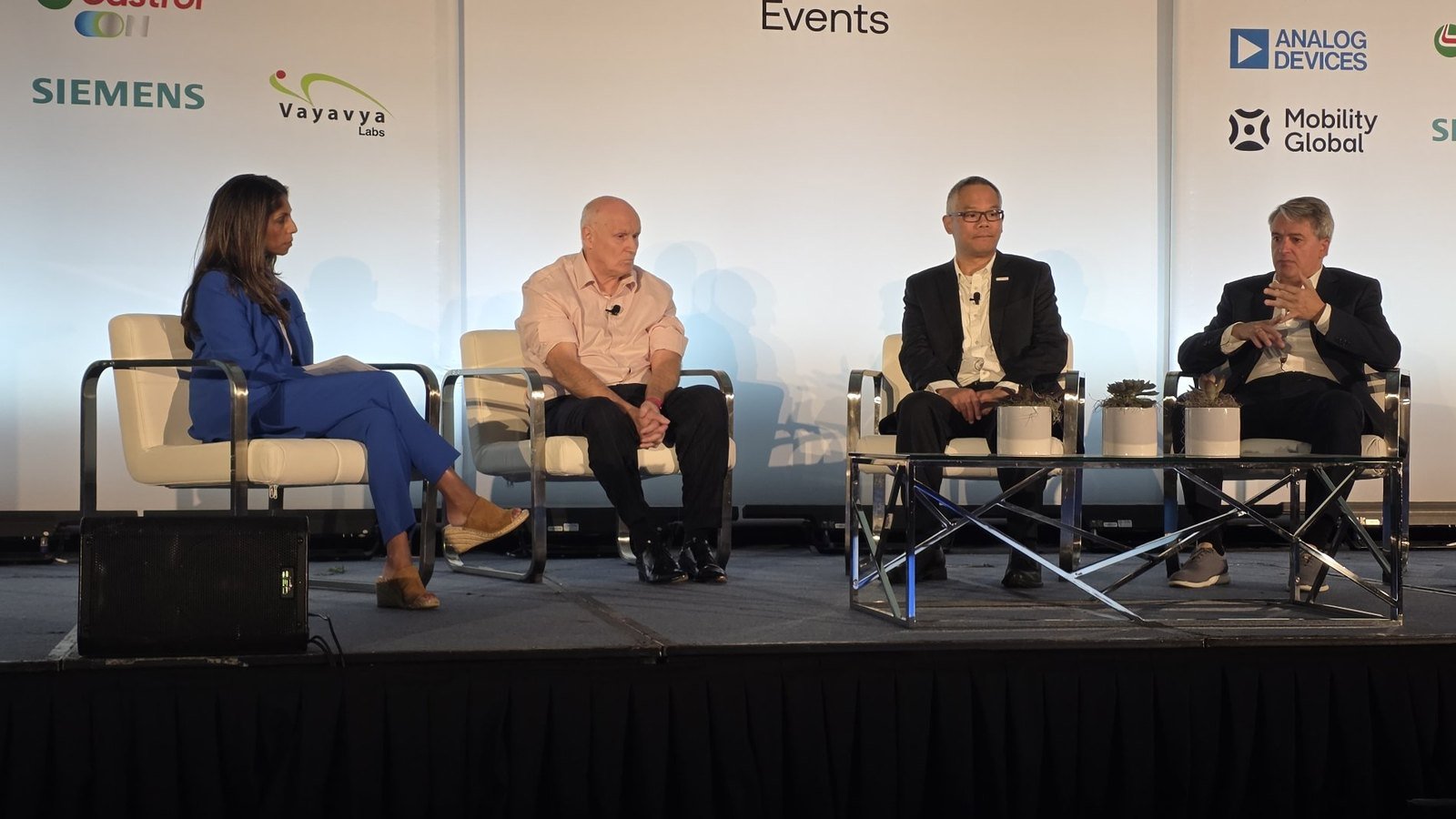
- Event
- Reuters Events: Automotive USA 2026, chaired by Melissa Mahtani
- Venue
- Huntington Place, Detroit, Michigan
- Date
- Tuesday, October 27, 2026, morning program
- Sessions
- A panel on software-defined vehicles, a keynote from Analog Devices, and two Reuters editorial interviews with Bosch and Honda, plus an expo floor interview with OpenText
Key takeaways
- Ramiro Gutierrez of ZF said that when engineers use AI on safety-critical parts, “the responsibility and accountability continues to remain with the engineer.”
- Keefe Leung of Karma Automotive said “AI needs to be supervised,” and that AI is already cutting months off development.
- Software now controls brakes, steering and suspension, and cars keep changing after they are sold through over-the-air updates.
- Yasmine King of Analog Devices said a smart model is only as good as the measurements behind it.
- Honda’s Jennifer Thomas called the bill on Chinese connected vehicles Honda’s “top legislative priority” and asked Congress for one national set of rules for self-driving cars.
Automotive conferences rarely mention insurance. But almost every question asked on stage in Detroit this morning is one an insurer will soon have to answer. Who is responsible when AI helps design a brake system? What does it mean when a car’s software changes after the policy is written? Can the data behind an AI decision be trusted? No speaker talked about insurance. The insurance view in this report is ours.
Who is accountable when AI helps design safety-critical parts?
Ramiro Gutierrez, ZF
The clearest answer of the morning came from Ramiro Gutierrez, President of North America at ZF Group, during a panel called “Winning the SDV Race: Scaling Software, Speed, and Profitability.” When engineers use AI tools on safety-critical products, he said, “the responsibility and accountability continues to remain with the engineer. It’s not transferred into an AI tool or anything like that.”
“Governance is key, and especially when you work on safety-critical products. Most of our products are safety-critical.”
Ramiro Gutierrez, ZF Group
He also set a simple test for any AI answer: “every time that a question goes back to the AI tool, the response should be grounded to real test results, not to general data or historical data.”
Keefe Leung, Karma Automotive
Moderator Melissa Mahtani asked how the industry manages “AI agents going rogue.” Keefe Leung, Senior Director of Software and Electrical Engineering at Karma Automotive, answered: “I don’t think anybody in this room would disagree that AI needs to be supervised. We’re certainly not letting it run rampant.” He said Karma uses private, not public, versions of AI tools to keep its data confidential, and that AI “is shaving at least months, if not years, off of the development process.”
Royston Jones, Siemens Digital Industries Software
Royston Jones, Global Head of Automotive and Transportation at Siemens Digital Industries Software, pointed to the data underneath. With so many AI copilots in use, he said engineers need stronger guardrails, “because obviously these models can only work with the quality of the data that they’re actually ingesting.” He said software-defined vehicle programs miss milestones because of “the fragmentation of data across all these sort of disciplines.”
What does a software-defined vehicle change for insurers?
Gutierrez explained why software now matters so much to a parts maker: “in a software-defined vehicle, you have access to control your brakes, your suspension, or your steering in ways that hasn’t been there before.” Leung added that at Karma, “90% of our ECUs are over-the-air update, but we can change the software any time on those.” ECUs are the small computers that run a car’s systems.
Speed is the pressure behind all of this. Mahtani cited research from ABI Research that Chinese automakers design a software-defined vehicle in about 18 months, compared with more than 48 months for legacy automakers.
Our view for insurers
A car that can change its braking or steering software after it is sold is a different risk on the last day of a policy than on the first. After a crash, claims teams may need to know which software version was running. And when safety systems are software, a fault can start in code, which raises new questions about who carries the loss: the automaker, the supplier or the software developer.
Can insurers trust the data behind AI decisions?
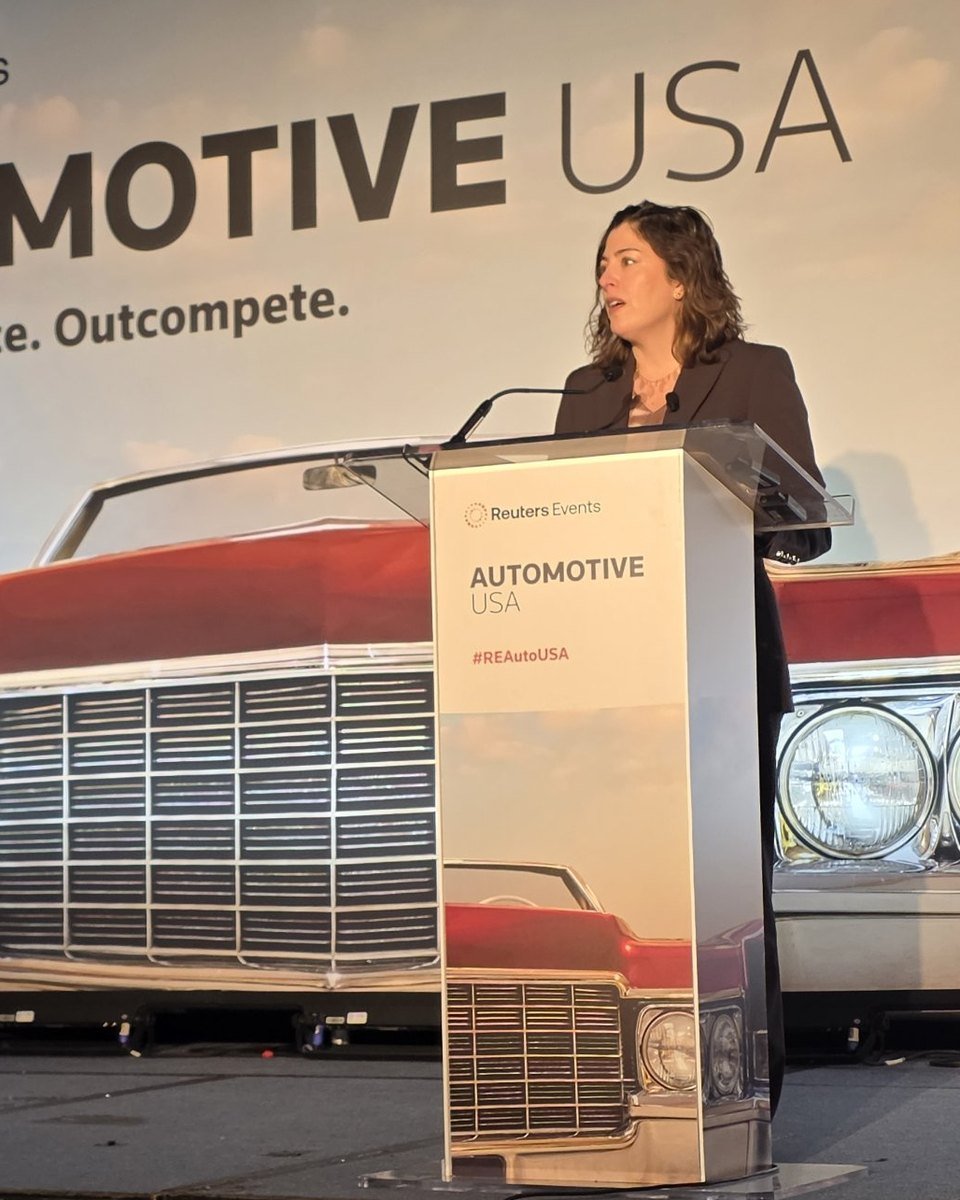
Yasmine King, Corporate Vice President and Head of the Automotive Business Unit at Analog Devices, built her keynote on one idea: “Better products create advantage, but faster learning sustains it.” Analog Devices is a platinum sponsor of the event.
She said the talk about intelligence usually starts with the AI model. “But in a vehicle, we also need confidence in the measurements feeding that model.” Her questions: “What was measured? Under what conditions? How reliable is the signal? What uncertainty remains in the system?”
“A sophisticated model cannot remove the need to answer these questions.”
Yasmine King, Analog Devices
Her example was the battery. Its signals, such as voltage, current and temperature, help answer: “Is it degrading? Is there an emerging pattern that indicates risk?” With better signals, she said, companies “can move from reacting to failures” to “predicting and preventing failures.” She also noted that “Over-the-air updates make it possible for vehicles to evolve after launch,” and closed with: “Compete fiercely on solutions. Align deliberately on outcomes.”
Our view for insurers
King’s questions are the same ones an underwriter should ask about any telematics or vehicle data used for pricing or claims. Battery health data matters too: it can shape repair or replace decisions and total loss calls on electric vehicles.
Can car data make insurance claims faster and fairer?
From the expo floor: Hilary Johnson, OpenText
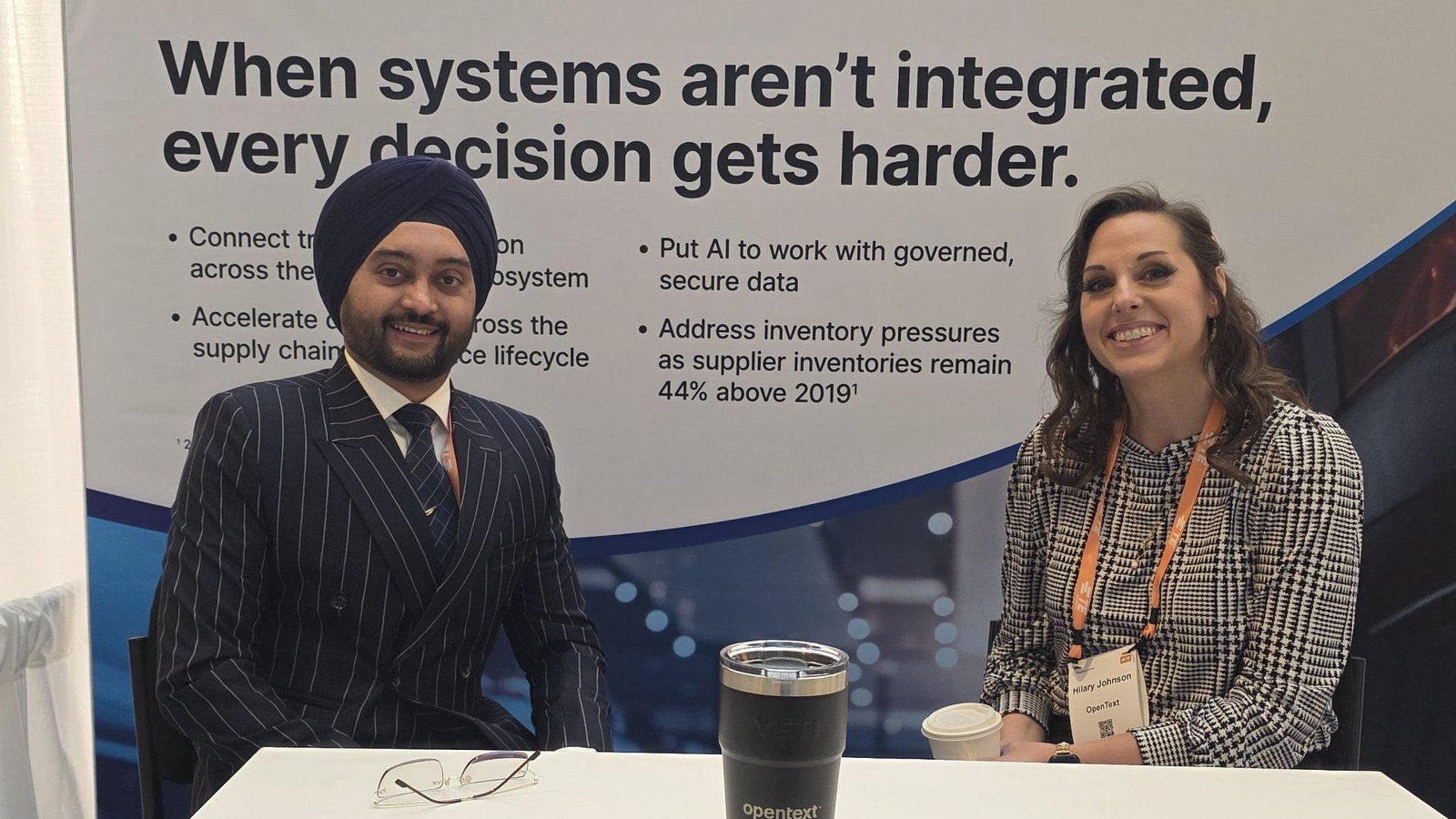
Before the sessions began, Zero Legacy Press spoke with Hilary Johnson, Senior Industry Marketing Strategist (Manufacturing, Transportation, High-Tech) at OpenText, an information and data management company headquartered in Waterloo, Ontario.
Cars now record what happens around them, and Johnson said that data can settle the hardest claims. “If there was a he said, she said, and we don’t have witnesses, we now have that car data that can help you figure out when did the car veer,” she said. Insurers can then say “we have solid facts and data to figure out who is at fault.”
On AI reading claim documents, she put people first: “The biggest thing is you still need to keep the human in the loop. AI is really there to just be a tool.” And none of it works without clean records.
“Good data in, good data out. If it’s not like that, you’re going to be making decisions off of bad information.”
Hilary Johnson, OpenText
What did Honda say about connected-car rules and self-driving cars?
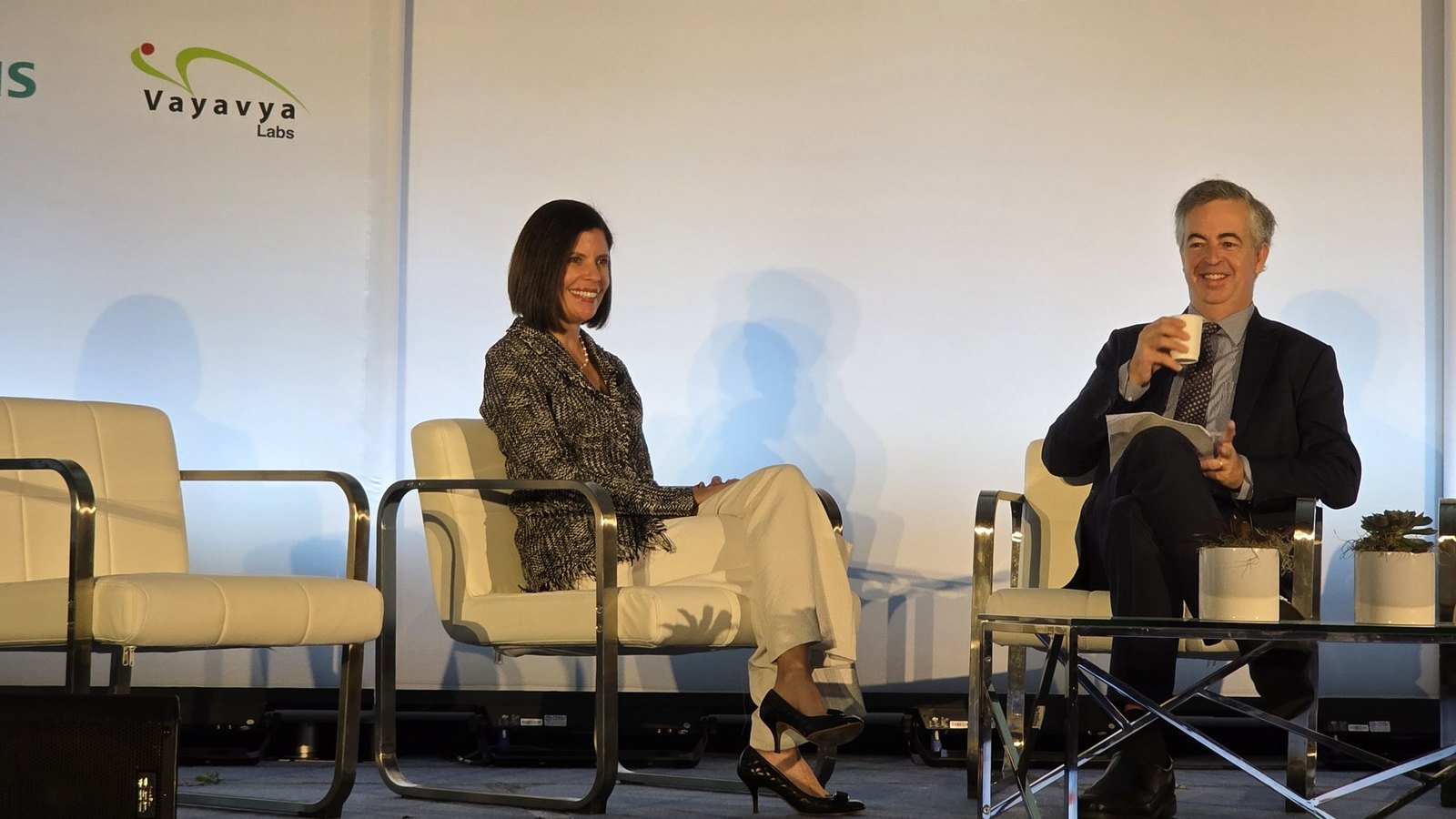
In a Reuters editorial interview with correspondent David Shepardson, Jennifer Thomas, Senior Vice President of Corporate Affairs and Government Relations at Honda, said the bill on Chinese connected vehicles is “Honda’s top legislative priority.” She said it “is critical to the industry’s competitiveness, but also our national security,” and asked the room to encourage lawmakers to pass it.
On self-driving cars, she called on Congress to “pass the Self-Drive Act so that we can get one set of rules nationwide.” She also urged care: “it’s important that we get it right,” because “the backlash could be really harmful to the technology.”
“Our industry thrives on certainty and predictability, and unfortunately, we are not seeing any of that these days.”
Jennifer Thomas, Honda
Thomas said Honda has grown from “a storefront in California in 1959” to “12 manufacturing facilities across eight states, 30,000 associates,” and has “invested nearly 30 billion dollars.” On trade, she said she is “cautiously optimistic that cooler heads will prevail” and that a January 1 doubling of tariffs “really would be catastrophic.” Honda is working “to prioritize resilience more, rather than perhaps efficiency” in its supply chain.
Our view for insurers
Rules on connected vehicles decide who can reach a car’s data and software. That shapes both the telematics data insurers rely on and the cyber risk of cars on the road. One national rulebook for self-driving cars would also shape how responsibility moves from the driver to the maker. Tariffs feed straight into the cost of parts and repairs.
How is Bosch using AI on the factory floor?
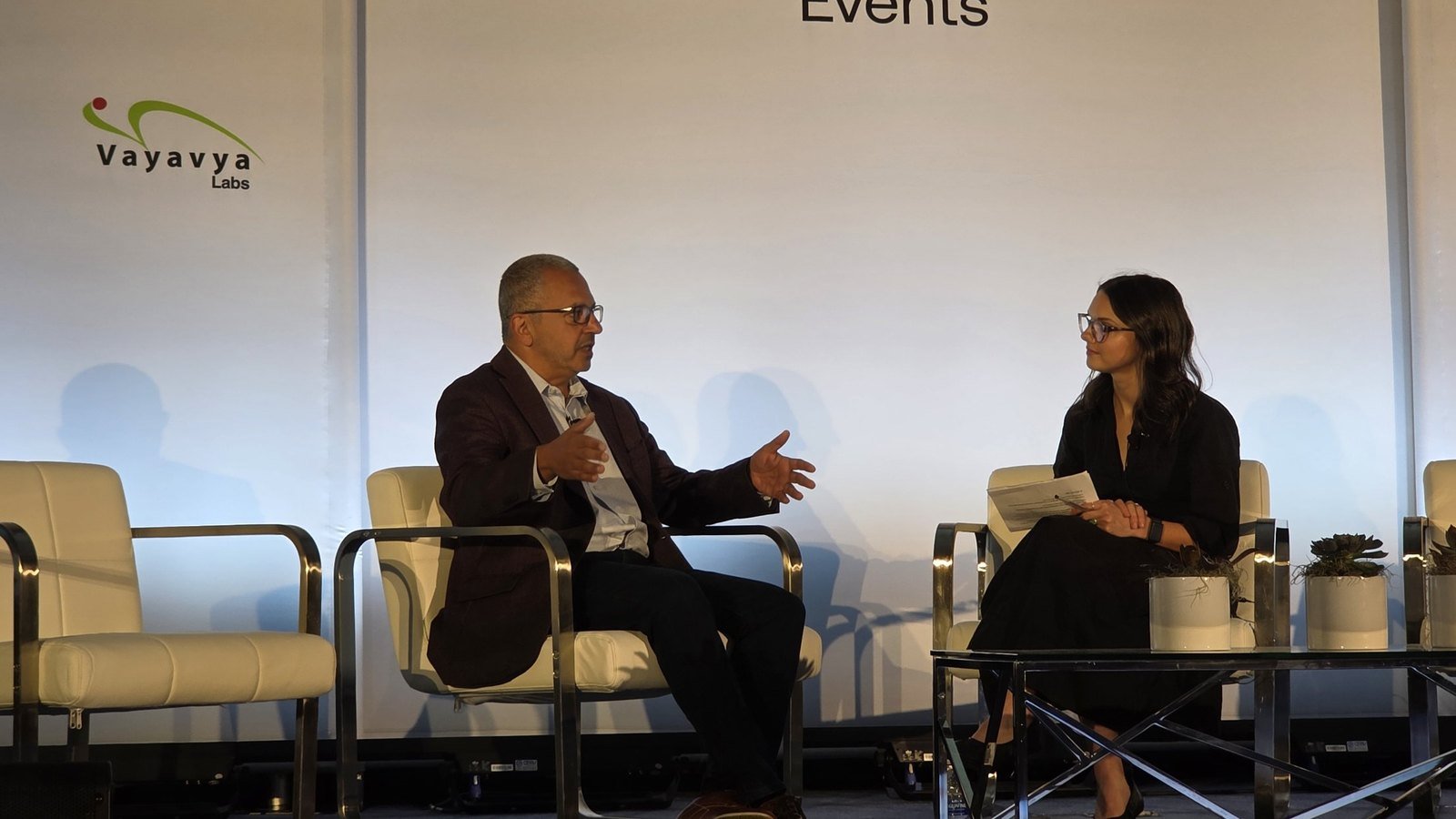
Peter Tadros, President of Power Solutions North America at Bosch, spoke with Reuters automotive correspondent Nora Eckert. A modern manufacturing line, he said, is “full of data that we can use today that we cannot just decipher by hand.” With AI, Bosch can move to “proactive quality control,” by “predicting where the next quality problem could happen and prevent it from before.”
He was just as clear about limits: “we do need that human touch to make sure we guide it. That we’re not leaving it making decisions on its own.”
Asked what keeps him up at night, he answered in one word: “Unpredictability.” He said “There is not going to be a silver bullet” on powertrains: gas engines, hybrids, extended-range EVs and fully electric cars “all will exist.”
Why it matters for insurers
Four leaders from four different companies said the same thing in different words: AI is moving fast, and a person must stay accountable for what it decides. ZF keeps that responsibility with the engineer. Karma supervises its AI. Bosch sets boundaries. Siemens adds guardrails. For insurers who cover these companies, or who use AI in their own pricing and claims, that is the question to ask first.
ZERO LEGACY, from Zero Legacy Press, makes the same case for insurers’ own AI. As the book puts it, “When the decision-maker is an algorithm, accountability cannot be delegated downward to a person; it must be built upward into the architecture” (page 93). Read about the book
Who spoke
- Ramiro Gutierrez, President of North America, ZF Group
- Keefe Leung, Senior Director of Software and Electrical Engineering, Karma Automotive
- Royston Jones, Global Head of Automotive and Transportation, Siemens Digital Industries Software
- Yasmine King, Corporate Vice President, Head of Automotive Business Unit, Analog Devices (keynote)
- Jennifer Thomas, Senior Vice President of Corporate Affairs and Government Relations, Honda
- Peter Tadros, President of Power Solutions North America, Bosch
- David Shepardson and Nora Eckert, correspondents, Reuters (interviewers)
- Melissa Mahtani, event chair and panel moderator
- Hilary Johnson, Senior Industry Marketing Strategist (Manufacturing, Transportation, High-Tech), OpenText (expo floor interview)