
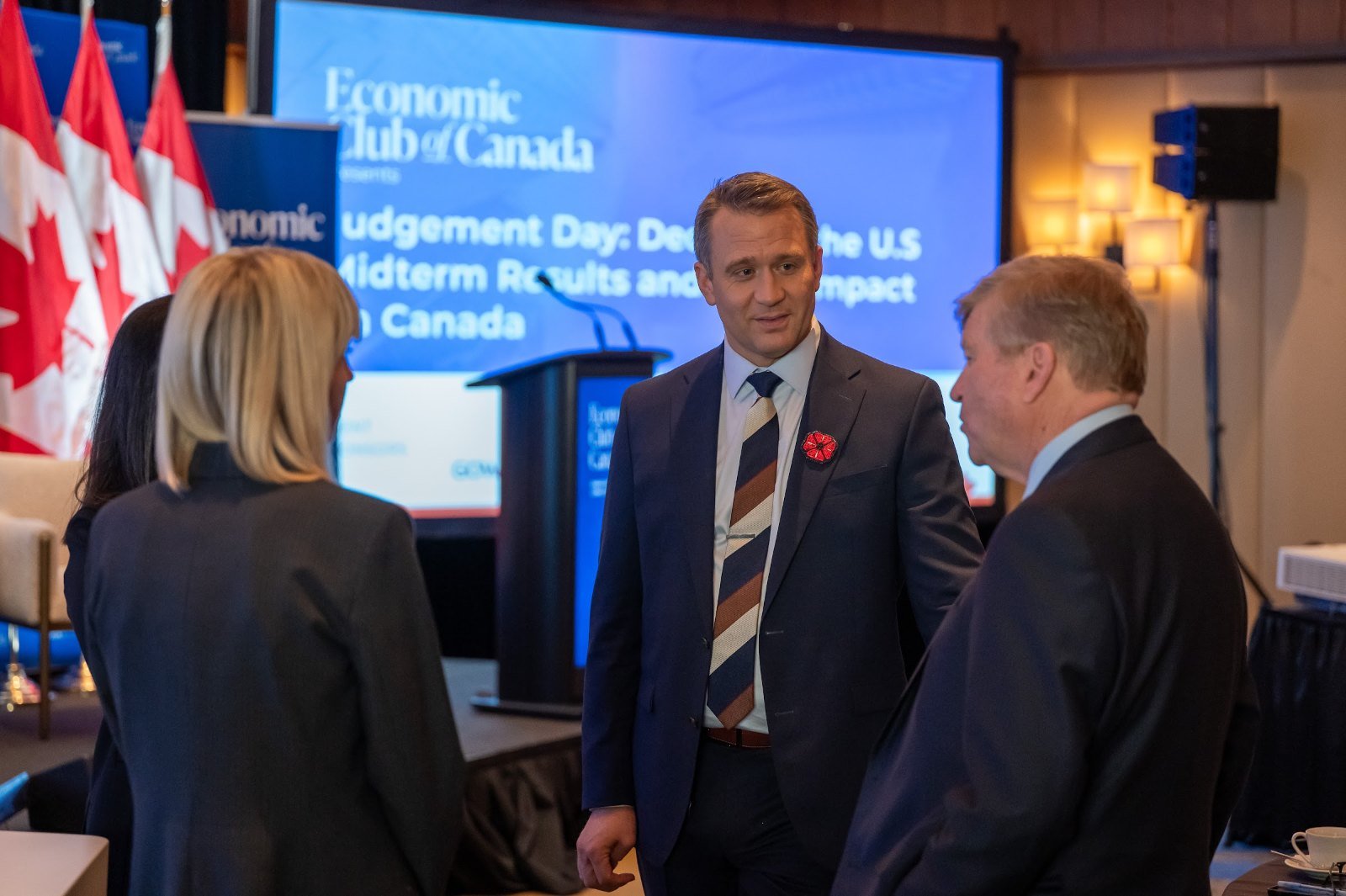
- Event
- Judgement Day: Decoding the U.S. Midterm Results and Their Impact on Canada, hosted by the Economic Club of Canada
- Venue
- Delta Hotels Toronto, Toronto, Ontario
- Date
- Thursday, November 5, 2026
- Panel
- Tom Clark, former Consul General of Canada to New York; Nik Nanos (Nanos Research); Wendy Wagner (Gowling WLG), moderated by David Common (CBC News)
- Partners
- Presented by Gowling WLG, with Deloitte as corporate season partner
Key takeaways
- Nik Nanos said the polls were right this time, and urged everyone to check who is behind a poll, especially in a single district or riding.
- Wendy Wagner said the next milestone to watch is a possible deal before January 2027, and that even a cut to sectoral tariffs would be a big win.
- Tom Clark said Canadian business should go to the United States, bring Americans here, and talk in plain words about selling and sourcing.
- Nanos said Canadians and Americans agree on the cost of living, AI and jobs, and competing with China, and that about 80% of Canadians still want a free trade deal.
- David Common asked whether Canada’s lesson has stuck. Clark’s answer was hopeful: “I think we’ve woken up. The worst thing we could do is go back to sleep.”
What did the polls get right about the U.S. midterms?
Democrats won control of both the House and the Senate in Tuesday’s vote (CTV News). Common opened by asking where the polls had gone wrong. “They weren’t,” Nanos said. “Not this time.”
Nanos, founder of Nanos Research, also shared a smart watch-out that applies to Canada too. A national poll is hard to sway, he said, but one poll in a single district or riding can shape a candidate’s fundraising and support. His advice: check that a poll comes from a real, known polling firm.
The result also followed a long pattern. From 1934 to 2022, the president’s party lost House seats in 20 of 23 midterm elections, according to the American Presidency Project at UC Santa Barbara.
Will the midterm results change Canada’s tariffs?
Wagner, a partner who leads the international trade group at Gowling WLG, gave a practical view. She said the result may not change the trade picture overnight, and she noted a move toward talks in the days just before the vote.
The big question, she said, is whether something gets done before January 2027. She pointed to the sectoral tariffs on goods like steel and lumber. Even a reduction “would be amazing,” she said. She also made a point about potash: if a deal lets Canadian potash enter the U.S. tariff free, that is not something Canada gives up. It is what Canada wants.
Wagner said she expects the new Congress to bring forward bills to ease some tariffs. Passing them past a presidential veto would take support from both parties, so she will be watching where trade lands on a busy agenda.
What happens in Washington over the next two years?
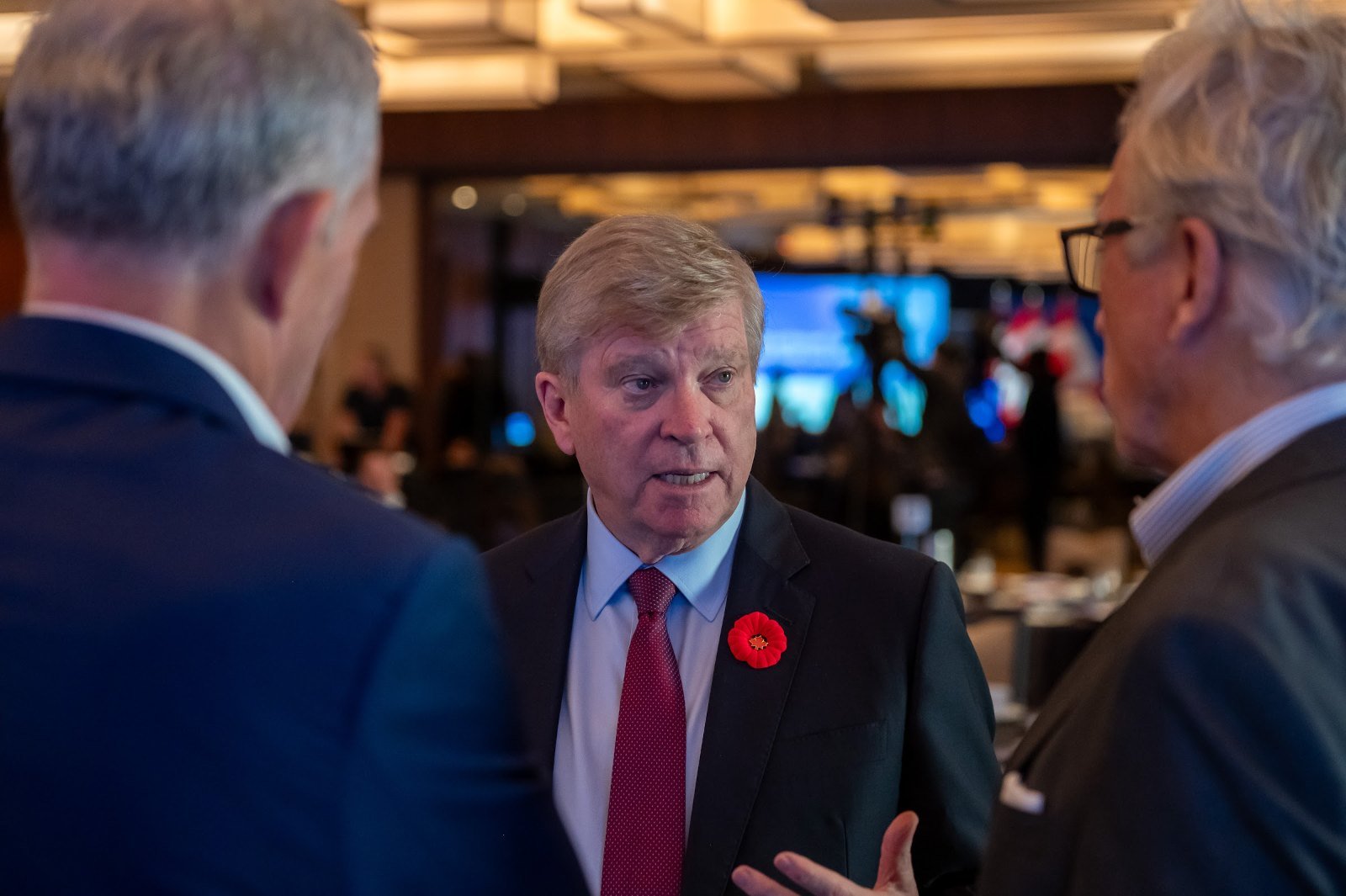
Clark, who served as Canada’s Consul General in New York, laid out what he called four time zones. The first is the next five days, as the parties take stock. The second is the next ten days, when the outgoing Congress returns. The third is the roughly 60 days before the new Congress sits, when he expects a push to pass bills and confirm nominations, including judges. The fourth is the two years that follow, when he said America will have to decide what it wants to be.
Nanos said the voters to watch are independents. To win the next presidential election, he said, a party must win them. His advice for Canada: do not tie the country to one party. Talk with independent-minded voters about the cost of living, North America, jobs and the economy. “I think that’s the new sweet spot,” he said.
Common added a helpful reality check. Tariffs mattered to voters because they were tied to the cost of living, he said, and Canada should keep that in view rather than overstate its own role. Clark agreed, and added a positive note: Canada now comes up in American news in a way it did not four years ago.
How should Canadian business work with Americans now?
Clark said this is “a moment that we cannot afford to miss.” Canadian business, he said, has to go to the United States and invite Americans to come here. He also urged plain words. A man who runs a small plastics factory in Rochester, New York, does not follow trade slogans, he said. He wants to know: can I still sell to Canada, and can I still buy from Canada? “We have to be seen as the solution,” Clark said.
Wagner said Canadian business never stopped showing up. Business travel, meetings with partners and work through trade associations carried on the whole time. On staff who cross the border for work, she expects business as usual, perhaps in a more comfortable climate.
Nanos added that when his firm surveys Canadian exporters about where they want to grow, the United States is still at the top of the list.
Clark also spoke about investment. He said investors in New York are looking for places that are stable and predictable for eight and ten year money. Canada, he said, should create the kind of buzz that makes investors want to be here.
What do Canadians and Americans still agree on?
Nanos said his polling finds common ground on both sides of the border. People in both countries worry about the rising cost of living. They want to know what AI means for jobs. And they worry about competing with China. His advice was to start there and build up.
Wagner asked the natural next question: Canada has pitched big ideas before, including critical minerals, so what is different now? Nanos said the midterms put the economy and the cost of living back at the centre. Canada’s opening, he said, is to be part of the solution.
Nanos also shared a hopeful finding. When his firm asks Canadians about the real parts of the relationship, from trade to defence, most still support them. About 80% of Canadians still want a free trade deal, he said, as long as it is a good one.
How can Canada and the United States build trust?
Clark said trust is built over time, and a full rebuild could take a generation. “Trust has to be earned,” he said, “and it’s got to be built over a period of time.”
Nanos offered a reason for hope. In one of his firm’s studies, people ranked the relationship between the prime minister and the president as the most important part of a strong Canada and U.S. relationship. He called it “tone at the top.” A good tone at the top, he said, could speed up the return to where things were.
Wagner said Canada can do both: strengthen the U.S. relationship and build at home. Canada can use strategic industrial policy and still follow trade rules, she said, including how governments buy. The French government buys from French companies. The UK government buys from UK companies. “This has forced us to get smart,” she said. She also encouraged the room to look sector by sector, since the auto industry and steel may see different results.
Common asked whether the lesson has stuck. Clark’s answer: “I think we’ve woken up. The worst thing we could do is go back to sleep.”
What does this mean for insurers?
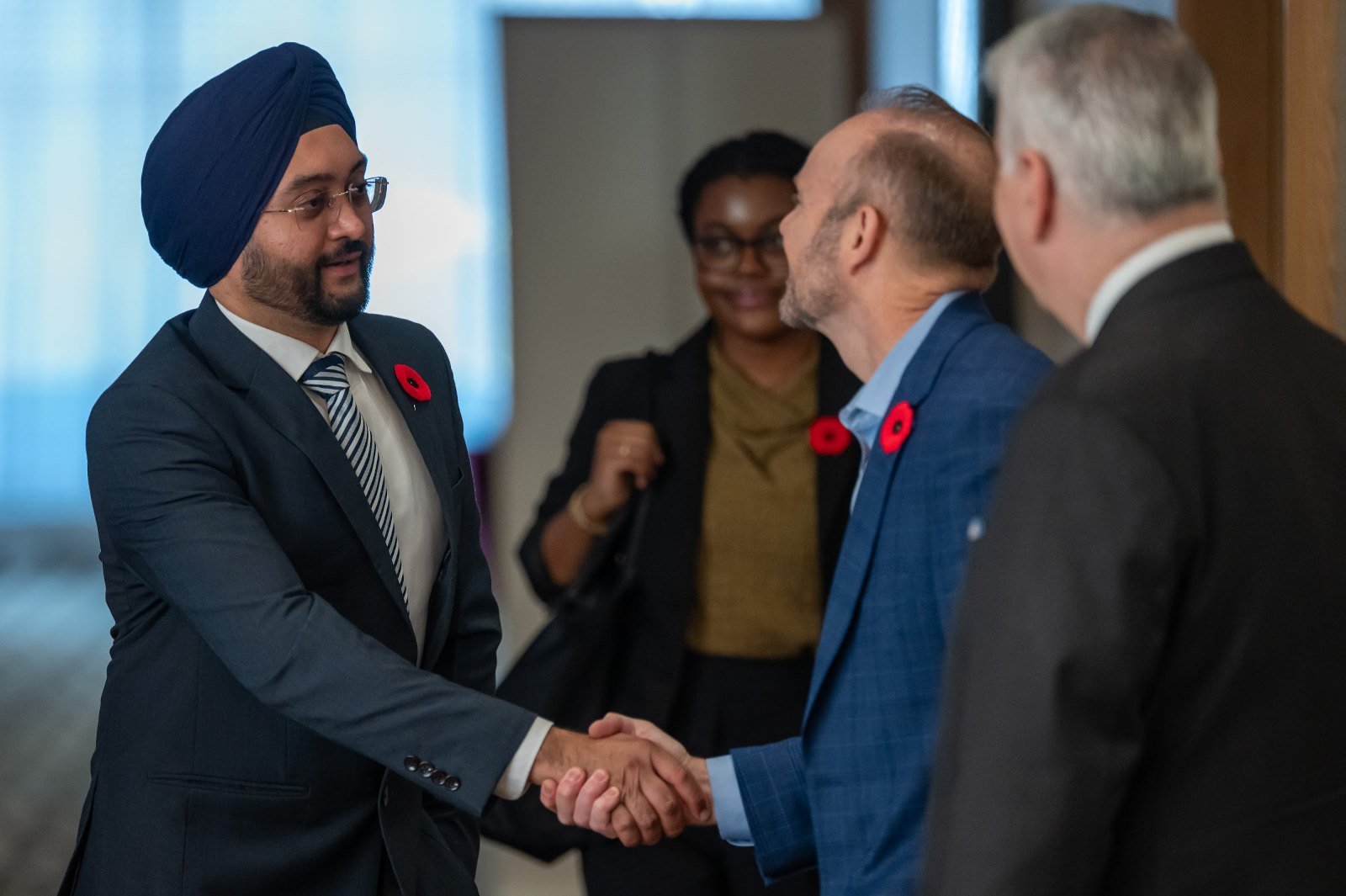
No one on the panel spoke about insurance. But much of what they said lands on insurers and on the businesses they cover. This is our view.
Predictability is what gets priced. Clark said investors want stable, predictable places for eight and ten year money. Insurers are long-term investors too, a point Sun Life CEO Kevin Strain made on an Economic Club of Canada stage last month (our Dispatch).
Tariffs move replacement costs. When the cost to replace stock, parts or equipment goes up, the values written on a policy can fall behind. A supply chain that crosses the border also adds moving parts when there is a loss.
Plain words win. Clark’s factory owner in Rochester wants a straight answer. So does a customer reading a policy.
Trust is the product. Clark said trust is built over time. ZERO LEGACY, from Zero Legacy Press, makes the same point about insurance: “In every other industry, trust is a sentiment. In ours, trust is the product.” (page 93) Read about the book
General information only. Not insurance, legal, trade or financial advice. Your own policy wording governs.
Who spoke
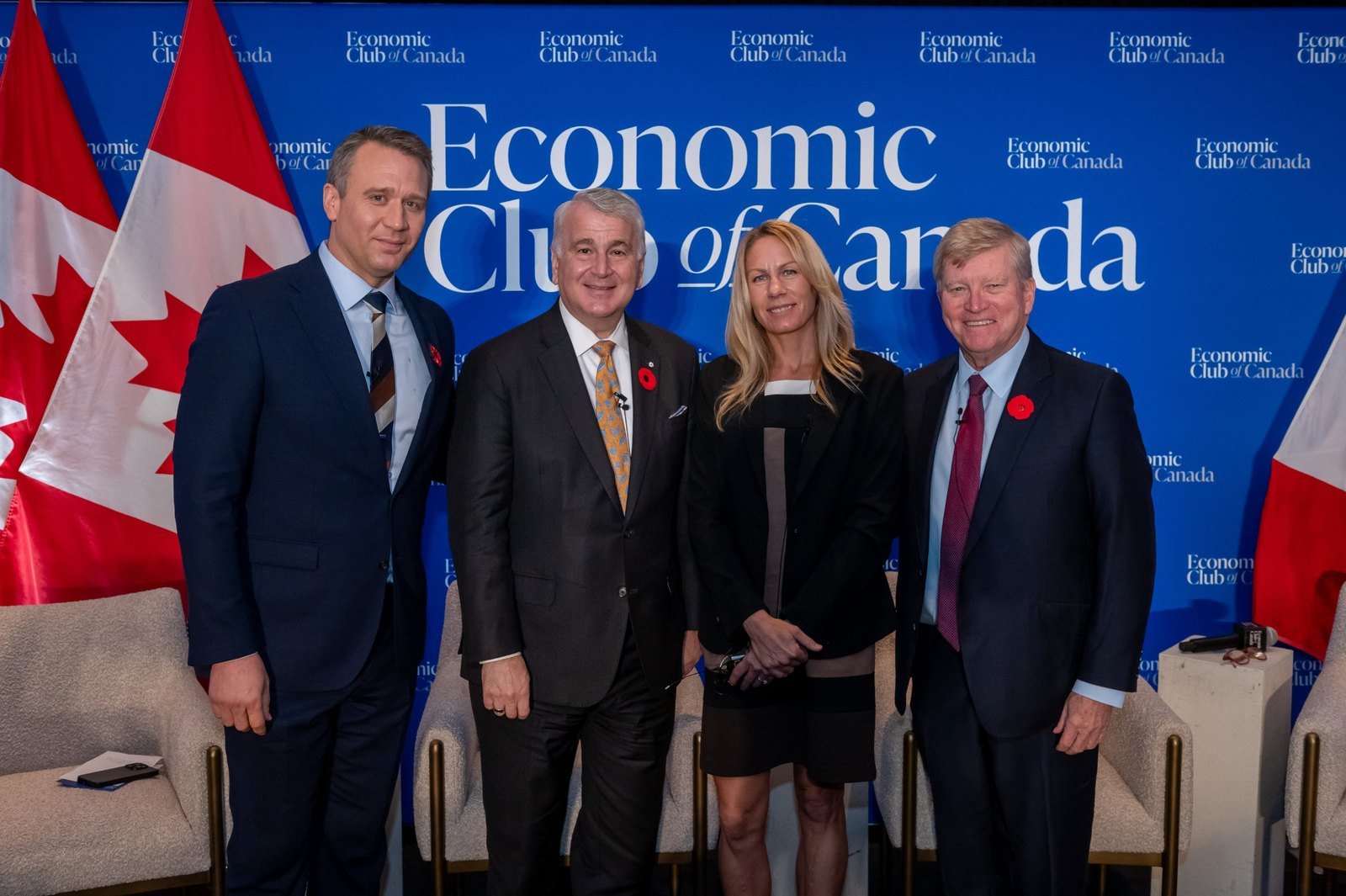
- Tom Clark, Former Consul General of Canada to New York
- Nik Nanos, Chief Data Scientist and Founder, Nanos Research
- Wendy Wagner, Partner and Head of International Trade Group, Gowling WLG
- David Common, National News Anchor, CBC News (moderator)