
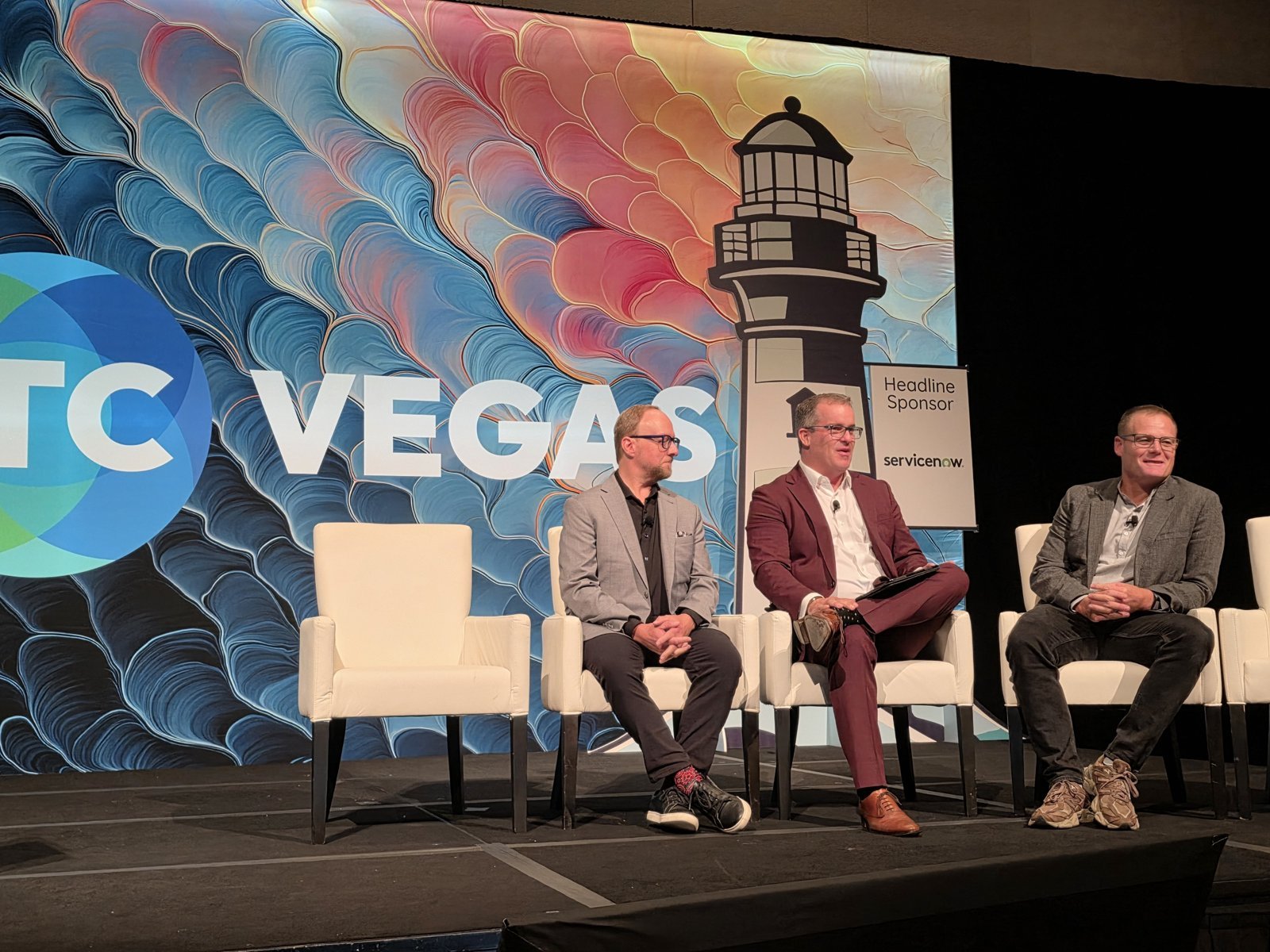
- Session
- The future of insurance: Powered by AI
- Stage
- AI-Powered Insurance Innovation Summit, ITC Vegas 2026, Mandalay Bay, Las Vegas
- When
- Tuesday, September 29, 2026, 9:05 a.m.
- Moderator
- James M. Benham, CEO & Co-Founder, JBK
- Speakers
- Mark Bailie, CEO, Compare the Market
Dale Steinke, Director of the Agent for the Future Advisors, Liberty Mutual Insurance
Key takeaways
- AI will take on intake and preparation, but independent agents are growing, not shrinking. Dale Steinke of Liberty Mutual Insurance said they are a larger part of the U.S. channel than ten years ago.
- Trust is the hardest part of selling insurance, and agents and brokers are the ones who build it, said James M. Benham of JBK.
- Insurance is a promise. Mark Bailie of Compare the Market asked whether a probabilistic or a deterministic machine should execute it, and called for an open standard to prove a real person said yes.
LAS VEGAS: The first session of the AI summit at ITC Vegas 2026 asked a simple question with a hard answer. If AI can do more of the work of selling insurance, what is left for people to do?
The answer from the stage on Tuesday morning was clear. A lot is left. Trust, regulation and the promise at the center of every policy still need people who can be held to account.
How did ITC Vegas 2026 open the AI summit?
Nigel Walsh, Head of Insurance Go-to-Market at ServiceNow, the headline sponsor, opened the day in a packed room with people standing at the back. He called himself an AI optimist and set out the day ahead: eight hours, 35 speakers and 14 sessions.
He had one request for the audience. Don’t sit silent. If you disagree, he said, challenge us, because that is how everyone learns what to take back to the office.
Will AI replace independent insurance agents?
James Benham opened with the question the industry has argued about for twenty years: what role do independent agents and brokers play from here?
Dale Steinke reminded the room how often agents have been written off. The internet was supposed to replace them. It did not happen. Independent agents, he said, are a larger part of the U.S. channel today than they were ten years ago.
“AI is going to automate the things outside the relationship. The relationship is what really matters.”
Dale Steinke, Liberty Mutual Insurance
Later he described what that looks like in practice. AI takes on the intake and the preparation. The agent spends more time on the moment that counts: sitting with a customer and explaining which option fits and why. He said some agencies are already managing two to three times the premium they used to.
He also had advice for the many vendors now chasing agents. His team tracks 106 AI-enabled vendors serving independent agents, with about as many more wanting to join the list. The ones that win, he said, will work inside the systems agents already use, not as one more tool on the side.
Why is trust the hardest part of selling insurance?
Benham put it in one line.
“Getting distribution is hard. Getting people to trust you is difficult.”
James M. Benham, JBK
He said building that trust is one of the biggest roles agents and brokers play. He also had a warning for startups that only resell access to the big AI models. As those models add new features on their own, he said, the token resellers are in a lot of trouble. His own firm, he noted, has more demand for services today than it did two years ago.
Should a probabilistic machine execute an insurance contract?
Mark Bailie brought a view from the UK, where comparison sites are a major way people buy insurance. Compare the Market, he said, holds records for 34 million of the UK’s 50 million adults.
He described three jobs any seller of insurance has to do well: be trusted with deeply sensitive personal data, carry the weight of financial services regulation, and connect with insurers at scale. None of those, he said, are technology problems. They are business, risk and commercial problems.
Then he asked the question of the session.
“It’s a promise that if something really unexpected goes wrong, you’re covered. Do you want a probabilistic machine executing that contract for you, or a deterministic one?”
Mark Bailie, Compare the Market
Everyone in the industry, he said, will have to decide which side of that line they are on. He also called for an open standard that sets the rules: how data is collected, what it is used for, and how to prove a real person said yes. Without that proof, he said, an insurer does not have a contract it can enforce.
Why it matters for insurers
Three speakers from three different corners of the market made the same point. AI is already changing how insurance is sold and serviced. But the parts that carry real risk, the relationship, the regulated decision and the promise itself, still need a person who can stand behind them.
Mark Bailie’s line between probabilistic and deterministic machines is the question at the heart of ZERO LEGACY, the new book from Zero Legacy Press. It argues that AI can read, sort and suggest, but a price or a claim decision has to be predictable and owned by someone accountable.
Who spoke at the session
- James M. Benham, CEO & Co-Founder, JBK (moderator)
- Mark Bailie, CEO, Compare the Market
- Dale Steinke, Director of the Agent for the Future Advisors, Liberty Mutual Insurance
- Nigel Walsh, Head of Insurance Go-to-Market, ServiceNow (opening remarks, headline sponsor)