
- Session
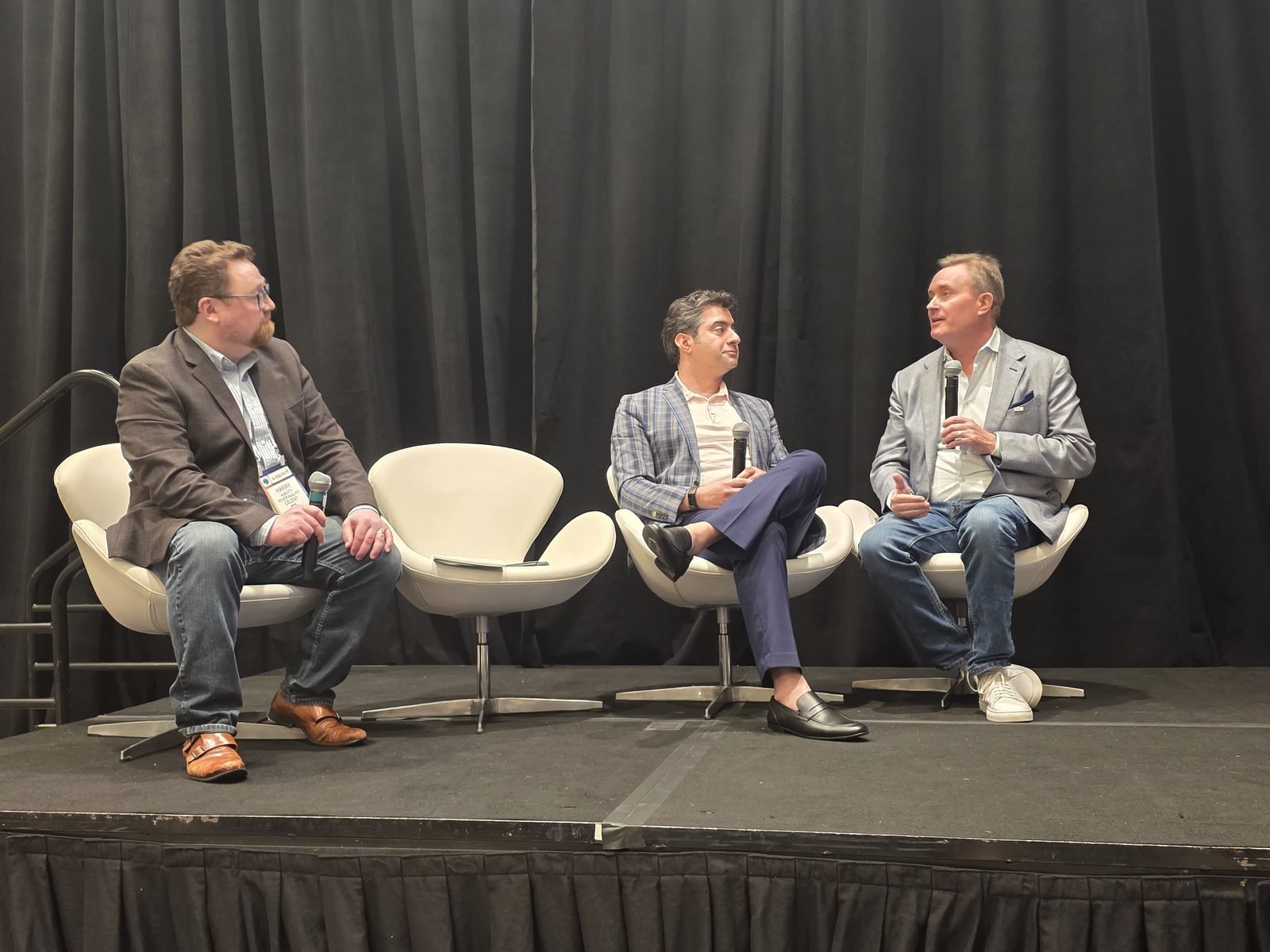
- Payments in insurance: Bridging the gap between policyholders and carriers
- Stage
- Celent Summit: Starting the Countdown to Agentic Insurance, Surf Ballroom EF, Mandalay Bay, ITC Vegas 2026, Las Vegas
- When
- Tuesday, September 29, 2026, 2:00 p.m.
- Speakers
- Ian Drysdale, CEO, One Inc; Mahan Hajianpour, Chief Technology Officer, Commonwealth Insurance; moderated by Harry Huberty, Senior Analyst, Celent
Key takeaways
- Policyholders want to pay without friction: no account to set up, a choice of wallet or card, and a reminder by text message.
- At Commonwealth Insurance, a pay link sent by text message was clicked more than anything else the carrier had tried. Phone calls did worst.
- Recurring payments give the best retention. Card details that update on their own keep them working.
- One Inc’s CEO said a top five carrier moved claim payments from 10% digital to 90% digital, and the operations team’s jobs changed overnight.
- Both speakers expect AI agents to pay bills and shop for cover. A carrier whose policy data an agent cannot read may lose the sale.
Why do payments matter so much to policyholders?
Huberty, a senior analyst at Celent, opened with the gap his research found. Policyholders almost never think about whether a payment went through. Carriers think about it all the time. He also pointed out that insurance has an unusual problem: most customer touchpoints are either a bill or something bad that has happened.
Hajianpour, chief technology officer at Commonwealth Insurance, said the number one thing from the customer’s side is a payment that feels frictionless. People who use Venmo, Apple Pay or Google Pay with their friends want to set it up and forget about it. When a carrier offers the method they already use, he said, it helps them connect with the company.
Drysdale, CEO of One Inc, added that younger customers treat the way they pay almost like a fashion choice. They look for Apple Pay, Google Pay, PayPal and Venmo, and they want to choose once and never see the step again.
What makes an insurance payment easy?
Hajianpour described two changes that he called game changers for Commonwealth.
No account needed
A customer can go to the website and make a one-time payment by entering two or three details about the policy. There is no sign-up and no login.
A text with a link
Commonwealth sends bills and emails, but the link in a text message was clicked more than anything else it has tried. Calling customers about a payment did worst.
Choice of method
Card and bank transfer are not enough on their own. Offering the wallets people already use makes paying feel familiar.
Drysdale said One Inc sees a 10 to 20 percent increase in payments when it sends text reminders. He also described where this is heading. With permission given up front, a carrier could learn when a customer is most likely to have money in the account, such as the day after payday, and ask for the payment then. He told the room a typical policyholder in some segments might only pay three times before stopping, so keeping them for one or two more months can add a lot of value.
How do carriers keep policyholders on recurring payments?
Drysdale compared a lapsed payment to a gym membership. The moment people have to think about it, especially when money is tight, they stop. That is most true for cover that is not required, such as an umbrella policy. His advice was to offer automatic monthly payment at the very first payment, and to use card credentials that stay live. One Inc uses network tokens from card issuers so that a lost or replaced card does not break the payment.
Hajianpour agreed. Recurring payments bring the best retention Commonwealth sees, and automatic updates to card expiry dates save the carrier from chasing customers. He was also honest about the hidden work. Failed cards and chargebacks create a chain of tasks across accounting, sales, underwriting and documents that the customer never sees.
What happens when claim payments go digital?
Drysdale said a top five carrier recently went live with One Inc’s claims payments and moved from 10 percent digital to 90 percent digital. The carrier was thrilled, but its operations team was briefly confused, because everyone’s job changed overnight. There were no more lost checks to chase. He said One Inc typically sees a ten point rise in Net Promoter Score when a carrier goes digital, and that 80 to 90 percent of consumers prefer a digital payout, whether push to debit card, PayPal or Venmo.
Hajianpour added a warning every claims leader should hear. A printed check can be stopped in the mailroom. A digital payment, once sent, cannot be pulled back. So a carrier has to get its processes and workflows ready before it moves claim payments to digital. He also said some customers with small claims now ask for a prepaid card, so they can get the money, fix the problem and close the claim.
Huberty shared a story from a coworker whose sister lost her home in the California wildfires. The insurer mailed the check to the address of the home that had burned down. Drysdale said One Inc now handles mortgage loss drafts digitally for a large part of the mortgage servicing industry, so a lender can sign off the same day instead of the usual four to eight weeks. Hajianpour added that a lost check can even cancel a policy. At Commonwealth, a check once fell behind a printer, and the carrier only found out a year later.
Will AI agents pay insurance bills?
Both speakers said yes, in time. Hajianpour described a personal agent that tells you which bills it paid today. For customers on a tight budget, he said, an agent could see that a paycheck is coming in two weeks and ask the carrier for a short extension on their behalf. To make that work, carriers will need to connect to those agents.
Drysdale looked five to ten years out. He expects a consumer’s agent to take a car’s VIN, find the best auto insurance, negotiate it, buy it and pay it. The insurers who get ahead of that, he said, are going to win.
If the policy data cannot be reached by the customer’s agent, the carrier loses that sale, even over ten dollars.
Mahan Hajianpour, as told to the room at ITC Vegas 2026 (paraphrased)
Hajianpour said carriers already hold what an agent would need: coverage details and the contract for every policy. Putting that behind an MCP server would let an agent answer questions like “does this cover water damage?” He also cautioned against expecting AI to replace adjusters or underwriters. In his view it is support that sits next to them, so an adjuster might handle twice as many claims, but it will take time.
Where is the line between billing and payments?
An audience member asked which functions belong in the billing system and which belong with the payment processor. Drysdale said the line will follow expertise. The payment processor’s job is to get the carrier paid and to give the customer a great way to pay, which core systems have not done well. Whatever the split, he said, the two should be fully integrated, because a poor integration means errors to clean up. Hajianpour said Commonwealth keeps billing on the carrier side and treats its processor as a partner that takes the payment and sends back the result.
Why it matters for insurers
The panel made payments sound less like back-office plumbing and more like the relationship itself. Get the bill and the claim right, and the customer stays.
ZERO LEGACY, from Zero Legacy Press, names Ian Drysdale in Chapter V, page 133, for an argument he made about payouts: use data to select the right disbursement rail for each claimant, “optionality exercised on the customer’s behalf rather than offloaded as a menu of choices.” Today he applied the same thinking to collecting premium: know when to charge, not just how. The same page carries a caution that fits the agent talk. Most consumers already use AI somewhere while they shop, but few will yet let an agent buy for them, so build the rails “but do not anchor the launch to a behavior that has not arrived.” And on page 151, the book gives carriers a simple rule for the MCP point Hajianpour raised: “Treat MCP as the agent’s hands and ACORD as the language it must speak.”
Who spoke at the session
- Ian Drysdale, CEO, One Inc
- Mahan Hajianpour, Chief Technology Officer, Commonwealth Insurance
- Harry Huberty, Senior Analyst, Celent (moderator)