
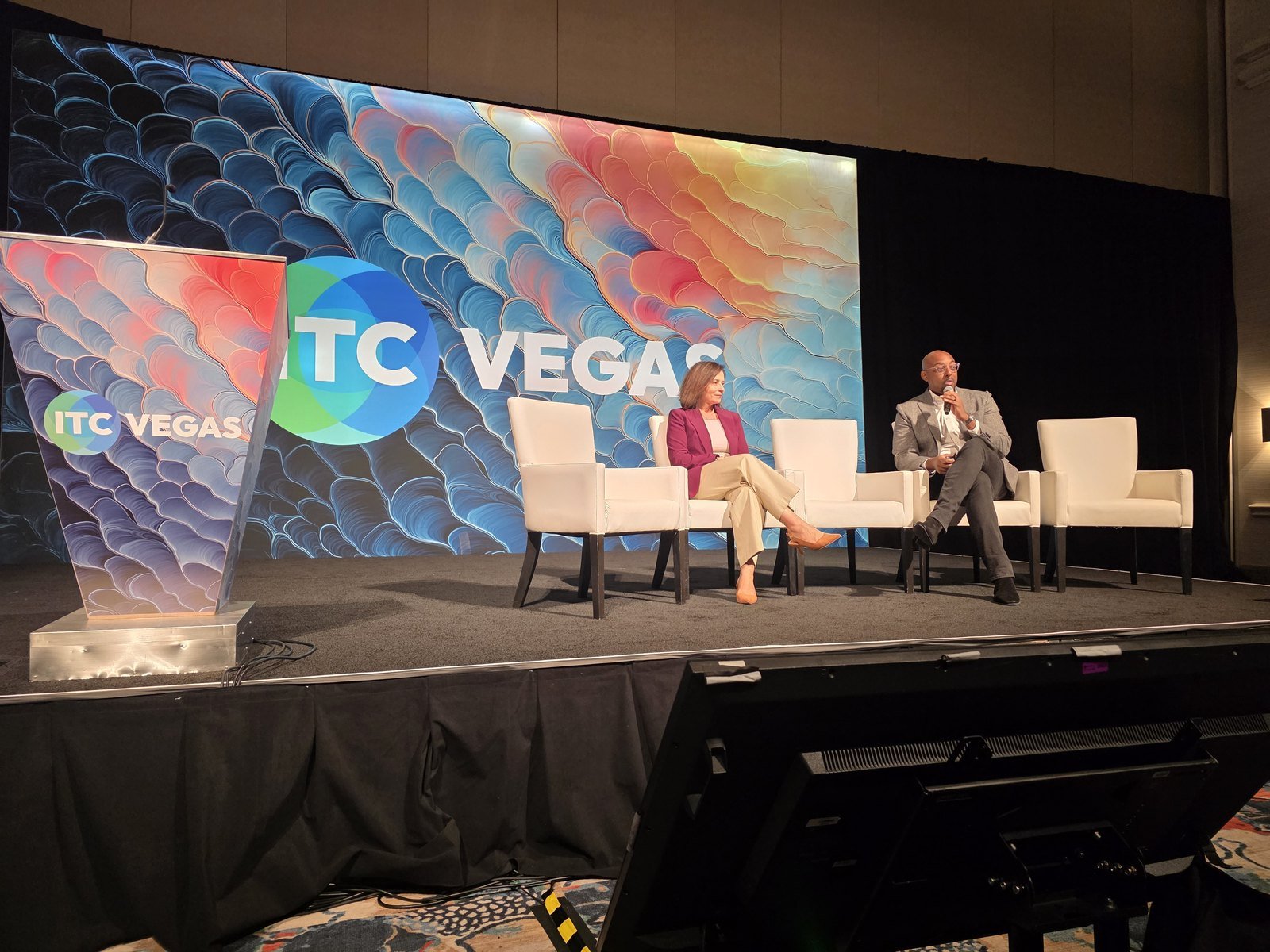
- Session
- Taking action in claims with agentic AI: from FNOL intake to triage to adjuster insights, presented by Bevaya
- Stage
- AI in Action, Mandalay Bay Ballroom L, ITC Vegas 2026, Las Vegas
- When
- Wednesday, September 30, 2026, 1:30 p.m.
- Speakers
- Marina Barg, Chief Claims Officer, U.S., Ascot Group; Jermaine Everett, Head of Sales, Bevaya (moderator)
Key takeaways
- Ascot’s technology overhaul started with claims, not underwriting or billing. Marina Barg said claims is “a service that is actually sold by our underwriters.”
- Ascot started AI with first notice of loss because, if it failed, the team could always fall back on the old process.
- Barg’s rule: “It really doesn’t make sense to automate a process that doesn’t work.”
- Bevaya’s Jermaine Everett said the intake work now runs with about 90% of new losses needing no human touch, up from about 85% when the slides were made.
Why start AI in claims?
Ascot Group is a specialty insurer and reinsurer working in the US, the UK and Bermuda. Barg described its lines as “exotic”: environmental risk, inland and ocean marine, space insurance for satellites and launches, and kidnap and ransom. It is a severity business, not a volume business.
That is why its technology transformation began in an unusual place. After a policy is bound, she said, the first question most clients ask is who will handle their claims and how the process will work.
“Claims is a service that is actually sold by our underwriters.”
Marina Barg, Chief Claims Officer, U.S., Ascot Group
Ascot first moved its claims onto Guidewire, then asked what it could build on top. It set up an AI center of excellence a few years ago, hiring an AI leader from outside the industry, because so much of what claims handles is unstructured.
How do you choose an AI partner for specialty claims?
Barg said the market is full of noise, and her first question to Bevaya was simple: do you do specialty? She wanted a partner that grew up in insurance, not one that did “banking one day, pharma next day” and then tried insurance.
Ascot also weighs build against buy on every project. Building means you have to support the tool and keep it current for years. Sometimes that is right. Sometimes, she said, it is better to work with experts who already know the field.
Why start with first notice of loss?
First notice of loss was a safe place to test a new partner. It was work Ascot already did well, so if the AI failed, the team could go back to the old way. It did not fail.
In specialty, a new loss can arrive as a three-line note from a broker with a policy number and one sentence. Ascot has no call center. A lean team runs a single email inbox, and because it is the only address the outside world knows, it fills with status questions, updates and documents too. The first job was to work out which emails were truly new losses.
Together, Ascot and Bevaya built rules to match each loss to the right policy, set up the claim in Guidewire the way people used to, and send it to the right adjuster. Clients now get their claim set up and acknowledged much faster. Anything that needs a person still goes to a person.
Barg’s biggest lesson came before any of that:
“It really doesn’t make sense to automate a process that doesn’t work or a process that requires a lot of workarounds.”
Marina Barg, Chief Claims Officer, U.S., Ascot Group
What comes after intake?
Everett said one piece of mail that comes in on a claim is often read by five or six people for different reasons. Ascot’s next step is to index everything else that lands in the inbox: tie each document to the right claim, summarize it, escalate what needs escalating, and send anything that needs a person to a person. The structured data that comes out can then feed underwriting, actuarial and analytics work.
How did Ascot bring its adjusters along?
Barg admitted she did not expect to need change management. Adjusters had asked for better tools, after all. She learned otherwise during Ascot’s move to Guidewire, when small workflow changes met real resistance. So the AI project was run by the claims team itself, not by IT. Once people saw the results, she said, they came along.
She was also clear about the goal. Ascot hires experienced professionals, many with degrees in their own fields, and wants them making better decisions faster.
“We’re not doing it so that we can check off the box and say we’ve done AI.”
Marina Barg, Chief Claims Officer, U.S., Ascot Group
Everett added a warning about expectations. Teams often expect AI to be perfect and drop it after one error, without measuring how accurate their own people were before. Barg agreed that Ascot expected everything to flow perfectly on day one, and learned to treat it as a journey.
Why it matters for insurers
Most AI talk in claims is about big decisions like fraud and coverage. Ascot shows the value of starting smaller: the messy inbox where every claim begins, with a safe way back if it does not work, and people who own the process deciding how it should run.
ZERO LEGACY, from Zero Legacy Press, is built on the same idea. Its Capstone Thesis, on page 5, ends with one imperative: “redesign the work; never automate a broken process.” And in Chapter V, on page 128, it makes the case that the claim is the moment the customer actually receives the product they have been paying for. Read about the book.
Who spoke at the session
- Marina Barg, Chief Claims Officer, U.S., Ascot Group
- Jermaine Everett, Head of Sales, Bevaya (moderator)