
- Session
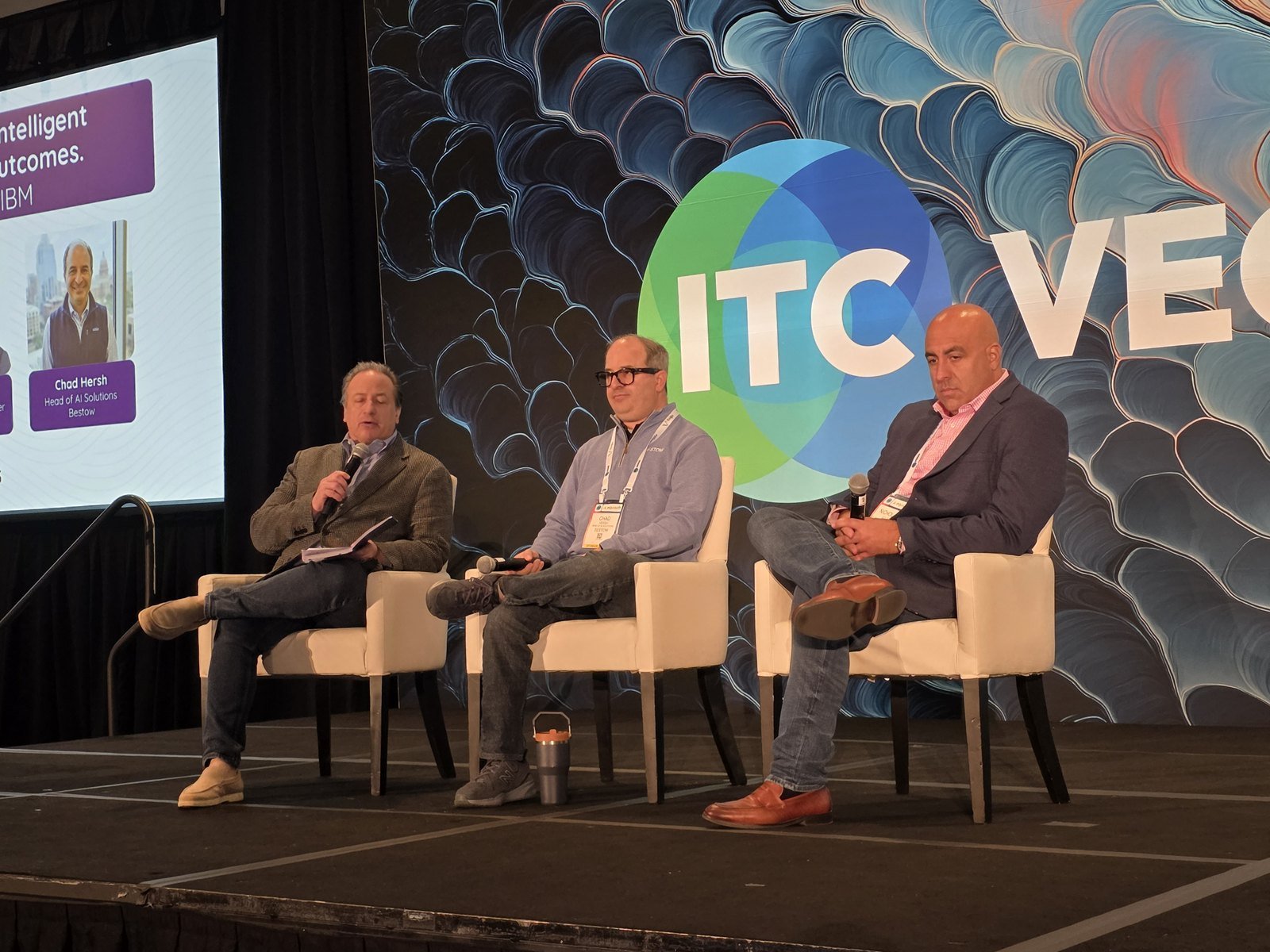
- Modern platform. Intelligent operations. Real outcomes. Presented by IBM
- Stage
- Lunch Seminar, Mandalay Bay Reef Ballroom EF, ITC Vegas 2026, Las Vegas
- When
- Wednesday, September 30, 2026, 12:30 p.m.
- Speakers
- Lawrence Krasner, Associate Partner, Financial Services, IBM (moderator); Nicholas Volpe, Chief Technology Officer, Prosperity Life; Chad Hersh, Head of AI Solutions, Bestow
Key takeaways
- Life insurance could afford to be slow because its products were slow. Nicholas Volpe of Prosperity Life said that excuse is going away, as clients research on their own and new agents expect modern tools.
- Chad Hersh of Bestow said insurance may look back on today as “the golden age of regulation”: clear enough to guide, loose enough to build.
- Back-office work like finance, HR and actuarial is adopting AI faster than distribution. As simple requests move to self-service, the calls that reach people get harder.
- Carriers do not have to migrate everything. Prosperity Life put a normalized data layer and an API gateway over several policy admin systems, so its portals see one view.
Why can’t life insurers stay slow anymore?
Volpe said the industry has long been allowed to move slowly because its products move slowly. That is changing. Clients research on their own and expect faster answers, new entrants are challenging old turnaround times, and a new generation of agents grew up with a phone in their hand and does not understand why insurance technology lags behind.
He described how the role of technology has shifted over his career. Early on, it was treated like an umpire in baseball: just do not make a bad call. Today, at Prosperity Life, technology is expected to drive the business. With AI, he said, building a product no longer has to take nine to twelve months.
Hersh compared insurance to travel. When airline tickets moved online, travel agents said they would focus on hotels and cruises instead. One by one, technology made each of those harder to defend. He sees the same slow shift starting in insurance, where the industry long believed products were too complex to sell direct.
“AI is not going to transform your company for you.”
Chad Hersh, Head of AI Solutions, Bestow
What AI does, he said, is let a company transform in ways it could not before, and let IT teams get more done so the backlog finally starts to shrink. It still takes real change management. “It’s not magical.”
How should insurers govern AI without slowing it down?
Hersh called today’s rules pragmatic. Regulators have mostly asked that an AI decision be at least as good, as fair and as accurate as a human one, usually with a person involved. He said many carriers would still welcome slightly clearer guidance, because loose rules make some of them nervous.
Volpe said Prosperity treats AI like any other technology it brings in, with a review committee that includes technical staff and the chief compliance officer. One cost people miss is usage: there may be no license fee, but every call to a model costs money.
His rule is to govern without getting in the way. Everyone at the company has access to a general AI assistant. When someone builds a tool that could help the whole company, it goes through an architecture review and is then shared. A reporting tool built in finance, for example, was rolled out to the whole finance team. He also warned that code written with AI can look great on the surface and be a mess underneath, so it still needs a real engineer to review it.
Where is AI paying off first?
Volpe said adoption is moving faster in HR, finance, accounting and actuarial work than in distribution. As customers and agents handle simple requests like address changes on their own, the calls that do reach people are about harder things, such as surrenders, income and tax questions. That means agents and service staff need to be smarter than ever.
Hersh warned against measuring success by how many people a bot replaces. Some moments are too sensitive to hand to a bot first, while others never needed a person. The better question, he said, is how to make people more effective, especially in an industry that is already losing agents and has years of IT backlog to clear. He pointed to actuarial tools that can surface reserves that could be released as the kind of work that changes results.
Do insurers still have to rip and replace the core?
Hersh said moving to the cloud was never enough on its own, because everything wrapped around the mainframe kept it switched on. Today there are AI tools to replace those surrounding systems, and to build new services around an old core. “The LLMs really aren’t that bad at building COBOL,” he said. For many carriers, the choice has shifted from buy to build.
He added that insurers do not have to migrate every block of business. Some blocks would need so much manual cleanup that it is cheaper to leave them where they are and make their data available to portals and chat tools instead.
Volpe described how Prosperity Life does exactly that. It still runs more than one policy admin system, and service staff used to jump between them to answer a single question. Prosperity built a normalized data layer and connected its portals to it through an API gateway. Add another admin system underneath, and the portal is none the wiser.
“Nobody cares anymore, except for your data teams.”
Nicholas Volpe, Chief Technology Officer, Prosperity Life, on running several policy admin systems
What will AI change in life insurance next?
Looking two to three years out, Volpe expects faster pricing, simpler riders and more product innovation. In distribution, he sees first-party and third-party data being used to start more useful conversations with clients.
One example is already live. Prosperity turns annual statements, often more than forty pages long, into a digital version that advisors can walk through with clients or send on, instead of showing only a few pages.
Why it matters for insurers
For years, modernization meant a choice between a costly full replacement and living with the old system. This panel described a third path: keep the core where it must stay, move the data into one clean layer, and give people and AI tools a single view on top of it.
ZERO LEGACY, from Zero Legacy Press, describes the same design in Chapter II, Re-Architecting the Core. On page 60 it sets out a “single-pane-of-glass surface” that reads from a modern intelligence layer and pulls policy data back through a gateway, “so the human works in a modern, unified view while the legacy core sits silently beneath.” The book also warns that simply wrapping an old mainframe does not make it fast, which is why the data layer matters. Read about the book.
Who spoke at the session
- Lawrence Krasner, Associate Partner, Financial Services, IBM (moderator)
- Nicholas Volpe, Chief Technology Officer, Prosperity Life
- Chad Hersh, Head of AI Solutions, Bestow