
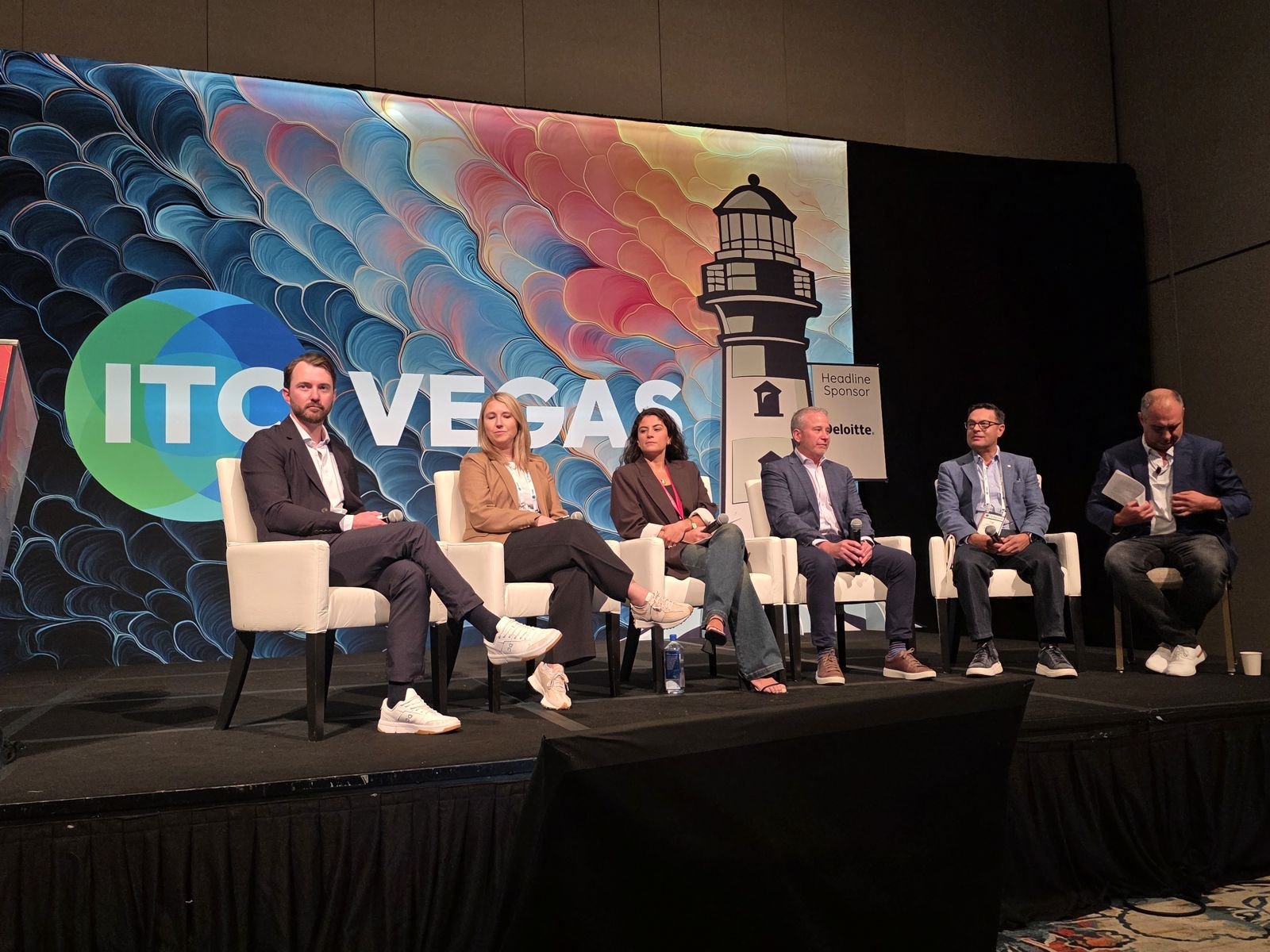
- Session
- From carve-out to launch: Building a scalable MGA for the AI-driven marketplace, presented by Deloitte
- Stage
- Capacity Connect Summit, Mandalay Bay Ballroom K, ITC Vegas 2026, Las Vegas
- When
- Wednesday, September 30, 2026, 10:35 a.m.
- Speakers
- John Matley, Principal, Deloitte (moderator); Stuart Tainsky, Chief Experience and Operating Officer, Private Client Select; Natalee Bailey Forner, Vice President of Applications, Private Client Select; Tim Hardcastle, CEO and Co-Founder, INSTANDA; Tori Sarmiento, VP of Sales, INSTANDA; Christopher Birkhofer, Senior Manager, Deloitte Consulting
Key takeaways
- Private Client Select (PCS) began as a joint venture between AIG and Stone Point Capital, and inherited technology 15 to 20 years old, said Stuart Tainsky.
- PCS moved from more than four policy admin systems and several billing systems to one platform on INSTANDA. Seven core products went live in January 2026 and more than 150,000 policies have moved so far, said Natalee Bailey Forner.
- PCS now releases every two weeks. At a legacy shop, Bailey Forner said, it was six or seven releases a year.
- Deloitte’s Christopher Birkhofer said the speed came from two things: PCS made decisions quickly, and INSTANDA sat in the room to solve problems with the team.
Why did Private Client Select need a new core system?
PCS was formed when AIG chose to focus on its core commercial business and Stone Point Capital saw a chance to return to the market for the most successful families in the US. Tainsky, who worked at PURE Insurance before joining, came in about a year and a half into the separation. An MGA is supposed to be something new and fresh, he said. PCS instead took on legacy technology that went back 15 to 20 years.
Bailey Forner described what that meant day to day. There were more than four policy admin systems, manual rating outside those systems and several billing systems. Data did not match across them, and broker partners were not sure where to go to write new business. In the past, she said, when a new need came up, a new system was added and the old one was never retired.
What did moving to one platform deliver?
PCS went live in January 2026 with seven core products in production, built in about eleven months. More than 150,000 policies have been migrated so far, and one billing system now invoices clients directly. Bailey Forner said the goal is to cut technology costs in half from where PCS started by the end of 2027.
“Being in multiple different policy systems is never a great idea.”
Natalee Bailey Forner, Vice President of Applications, Private Client Select
The bigger change is pace. PCS now pushes a release every two weeks, which lets the team fix problems fast during a large migration and launch new products later this year. No transformation is perfect, she said. What matters is how quickly you can respond when something breaks.
What makes a no-code policy platform fast in practice?
Hardcastle said he founded INSTANDA just over ten years ago to help insurers get out of what he called “the legacy trap,” by putting control of the product in the hands of the people who run the business.
Sarmiento named three reasons the PCS program moved quickly. First, business analysts can design, launch and adjust products themselves. Second, the platform works as an orchestration layer that is open to other vendors, with more than 100 integration partners in the PCS program, including Salesforce, Coherent and IVANS. Third, people: daily standups across PCS, INSTANDA and Deloitte to solve whatever was not working.
Bailey Forner filled in the picture. Salesforce runs the front end for broker and client experience and part of the intake pipeline. Coherent handles rating, so PCS can change rates without a full release.
How do you run a core replacement this fast without losing control?
Birkhofer said four constraints pulled against each other: INSTANDA’s standard workflows, the workflow PCS wanted, the products to configure and all the outside systems that had to talk to each other. Deloitte sequenced the whole program along the policy lifecycle, from quote to bind, so each part could be built and tested together. What kept it moving was adaptability. PCS made practical decisions quickly instead of getting stuck in analysis, and INSTANDA worked through problems in the room with the team.
Asked where PCS chose to slow down, Bailey Forner gave one answer: choosing partners. PCS will live with this ecosystem for many years, she said, and as an MGU it runs on different margins than a traditional carrier. So the team took its time on that one decision and moved fast on everything after it.
Why it matters for insurers
Most carriers carry the same problem PCS inherited: systems that were added and never retired. The PCS story shows that a carve-out can be a clean break, if the team is willing to retire the old systems instead of rebuilding them in new software, and to spend its care on choosing partners.
ZERO LEGACY, from Zero Legacy Press, makes the same case in Chapter II, page 41. It cites Celent research that insurers spend roughly 70 to 80% of their IT budgets keeping legacy systems running, and describes a transformation leader whose program took fifteen years because of “the temptation to recreate the old legacy system inside the new software rather than adopt a greenfield approach.” Read about the book.
Who spoke at the session
- John Matley, Principal, Deloitte (moderator)
- Stuart Tainsky, Chief Experience and Operating Officer, Private Client Select
- Natalee Bailey Forner, Vice President of Applications, Private Client Select
- Tim Hardcastle, CEO and Co-Founder, INSTANDA
- Tori Sarmiento, VP of Sales, INSTANDA
- Christopher Birkhofer, Senior Manager, Deloitte Consulting