
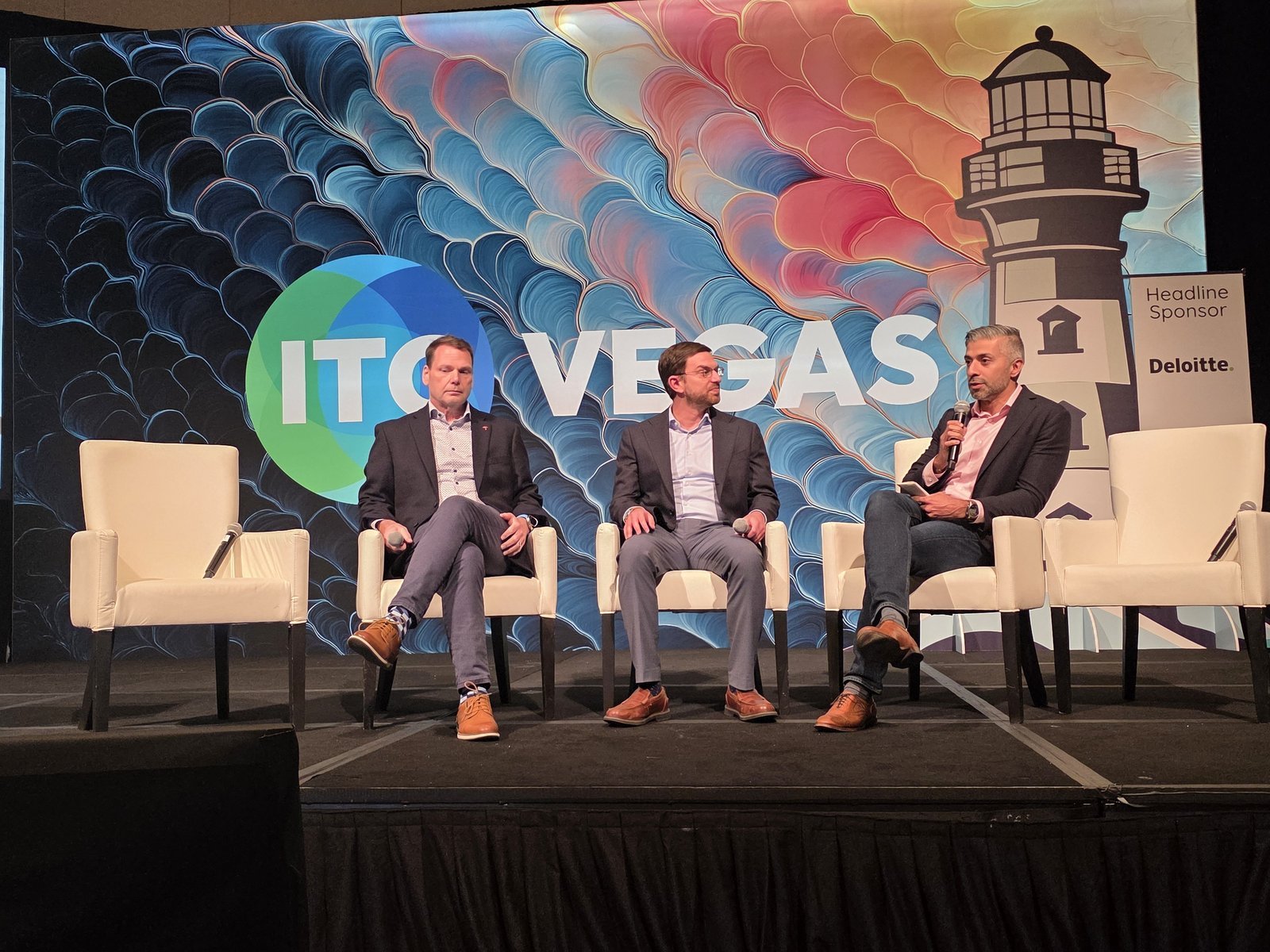
- Session
- The future of distribution: AI-powered connectivity across the commercial ecosystem, presented by Applied Systems
- Stage
- Capacity Connect Summit, Mandalay Bay Ballroom K, ITC Vegas 2026, Las Vegas
- When
- Wednesday, September 30, 2026, 2:00 p.m.
- Speakers
- Zaheer Hooda, Chief Customer Officer, Carrier, Applied Systems (moderator); Jesse Heller, AVP, Agent-Facing Technology, Liberty Mutual; Tim Lewis, VP, Enterprise Distribution and Solutions, Travelers
Key takeaways
- Applied Systems and Cytora have connected carriers directly to the agency management system. It went live last week with three large carriers, starting with renewal remarketing.
- Zaheer Hooda of Applied said risk will consolidate with the carriers that are easiest to work with.
- Tim Lewis of Travelers said the industry is good at moving data but not at digitizing it across the value chain, so the same data gets rekeyed again and again.
- Jesse Heller of Liberty Mutual described “email quote”: send any document, and get back a first price and appetite signal without rekeying.
Why connect carriers to the agency management system?
Hooda joined Applied Systems when it acquired Cytora about a year ago. He said about 70% of retail agencies use an Applied agency management system, and seven of the top ten global commercial P&C insurers work with Cytora. Put the two together, and carriers and agencies sit on the same connection for the first time.
He explained why that matters. The agency management system is two things at once. It is the system of record, so the underwriting data a carrier needs already lives there. And it is the system of action, where risk is actually placed.
“Carriers who are the easiest to work with, that’s where risk will consolidate.”
Zaheer Hooda, Chief Customer Officer, Carrier, Applied Systems
The connection went live last week with three large carriers, two of them on the stage. The first use case is renewal remarketing. Hooda said hundreds of submissions have already flowed through and quotes are coming back, with five or six agencies in the pilot.
What is actually broken in commercial distribution today?
Lewis said the problem is data. A broker spends time building a submission and gathering information from the customer. It then reaches the carrier as a PDF. The carrier rekeys it, sometimes offshore, and an underwriter finds something missing, so it goes back to the broker and then to the customer.
“We’re really good at moving data. We’re not necessarily good at digitizing and moving it throughout the lifecycle and value chain.”
Tim Lewis, VP, Enterprise Distribution and Solutions, Travelers
Heller added that remarketing makes this worse. The data a carrier asks for already sits in the agency’s system, and the agent is being asked to provide it again in a different format.
How are Travelers and Liberty Mutual using it?
Lewis said Travelers starts from the broker’s point of view: how brokers want to trade, where their data comes from, and how they can reach it. Travelers is also investing in its own technology and processes, with a goal of taking turnaround from weeks to days to hours to minutes.
What excited Travelers most was quoting straight from data already in the agency system, which Lewis called the first step toward agentic trading. A broker picks a book to remarket, the carriers quote it, and the broker comes back to the customer with a recommendation, without spending the day in carrier portals. Lewis said brokers tell Travelers the same thing again and again: they would rather not log in to carrier portals and want to work in their own system.
Liberty Mutual joined the pilot alongside Travelers. Heller also described a second use case, which Liberty calls email quote. An agent on any agency system can email almost any document, such as an application, a voice memo or a declarations page. Cytora pulls out the data, fills in Liberty’s quoting platform, and sends back a link with a first price indication and an appetite signal. The agent can then decide if the quote is worth finishing. Liberty plans to add the same upload inside its own quoting platform over the next few months.
Hooda summed up the design idea: separate the automation from the channel. Build it once for a line of business, and it works however the business arrives.
What comes after quoting?
Heller pointed to a long-standing problem for growing brokers. As they grow, they pick up dozens or even hundreds of carrier relationships, and moving a book to a preferred carrier is usually not worth the effort, because it has to be done policy by policy. With the data already connected, that move gets much easier.
Lewis looked further out. He said Travelers wants to be an indispensable partner to brokers across the whole lifecycle, not just quoting but issuing and servicing too, however a broker chooses to submit. “I think we’re just hitting the tip of the iceberg,” he said. Hooda noted that agentic trading will grow, but in the near term portals, email and APIs will all still exist.
Why did Travelers and Liberty Mutual move early?
Hooda asked the panel why they moved early when some in the room would see this as a threat. Lewis said it comes back to what agents and brokers want. Travelers wants to be the easiest carrier to transact with, which is why it chose to be an anchor partner.
Heller said Liberty sees AI as a way to support independent agents, not replace them, by taking away tasks like rekeying data they already have and giving them time back for new business, advice and relationships.
“It’s not a threat. It’s really a way to support you and to earn more of your business because it’s going to make us an easier carrier to do business with.”
Jesse Heller, AVP, Agent-Facing Technology, Liberty Mutual
Heller admitted he was a little skeptical going in. The partnership was formalized only eight to ten weeks ago, and quotes are already coming back. Lewis said the agencies in the pilot liked seeing their carrier, their solution provider and their agency system provider working on the problem together.
“You don’t need the humans for data capturing. You need them for what they’re good at.”
Tim Lewis, VP, Enterprise Distribution and Solutions, Travelers
Why it matters for insurers
For years, carriers competed for brokers by building better portals. This panel described the opposite: the carrier goes to where the broker already works. If risk moves to the carriers that are easiest to trade with, then the connection to the agency’s system becomes one of the most valuable places in the market.
ZERO LEGACY, from Zero Legacy Press, makes the same argument. In Chapter V, on pages 131 and 140, it covers the broker partnerships panel Tim Lewis joined in New York, where Garrett Droege observed that brokers route business not to the three best carriers but to the three easiest to transact with. The book’s conclusion is that whoever owns the interface owns the routing. On page 148 it adds a hard rule for anyone building that layer: “Native, bidirectional AMS integration is not a feature, it is the price of adoption.” Its Capstone Thesis gives brokers and MGAs one instruction: “Abandon portal hunting; the manual rekeying is the work that disappears.” Read about the book.
Who spoke at the session
- Zaheer Hooda, Chief Customer Officer, Carrier, Applied Systems (moderator)
- Jesse Heller, AVP, Agent-Facing Technology, Liberty Mutual
- Tim Lewis, VP, Enterprise Distribution and Solutions, Travelers